
2026 Trends Are Shaping the Next Generation of Outdoor Screens
Outdoor living is no longer an afterthought. In 2026, patios, covered porches, lanais, and backyard entertaining spaces are being designed with the same intention as kitchens and living rooms. As homeowners continue investing in comfort, convenience, and property value, outdoor screens are evolving rapidly to meet higher expectations.
The next generation of outdoor screens isn’t just about blocking bugs. It’s about smart automation, energy efficiency, architectural design, and year-round usability. Let’s explore the biggest trends shaping outdoor screens in 2026—and why they matter for homeowners planning upgrades this year.
- Seamless Smart Home Integration
One of the strongest trends influencing outdoor screens in 2026 is automation. Motorized retractable screens are now commonly integrated into whole-home smart systems. Instead of operating screens manually, homeowners can:
- Lower or raise screens with a remote
- Control screens from a smartphone app
- Schedule automatic deployment during peak sun hours
- Integrate wind and sun sensors for automatic adjustment
This level of control makes outdoor spaces adaptable. When the afternoon sun intensifies, screens can automatically lower to reduce glare and heat. When guests arrive in the evening, screens can retract to open up views.
The emphasis is no longer just convenience—it’s intelligent comfort.
- Climate Control & Energy Efficiency
As energy costs continue to fluctuate, homeowners are looking for ways to improve efficiency without sacrificing comfort. Outdoor screens are increasingly recognized as part of the energy strategy of a home.
High-performance solar mesh fabrics can block up to 90–97% of UV rays, significantly reducing heat gain through large patio openings and glass doors. By stopping solar heat before it enters the home, air conditioning systems work less, and indoor temperatures remain more stable.
In 2026, energy-conscious buyers are viewing outdoor screens not as decorative add-ons but as functional tools for reducing cooling loads—especially in warm climates.
- Clean Architectural Design
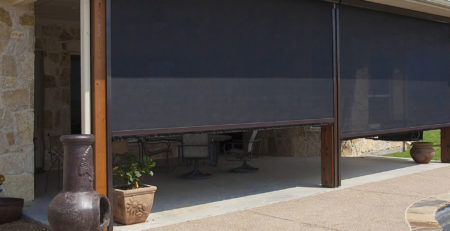
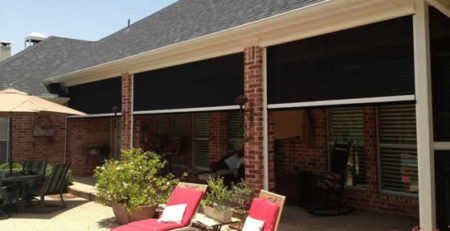
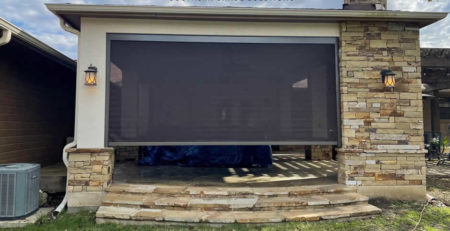
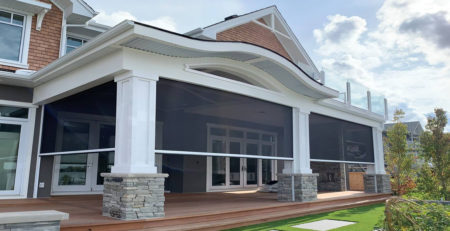
Today’s outdoor screens are designed to disappear when not in use. Slim housing systems, concealed tracks, and color-matched components allow screens to blend into the structure rather than stand out.
This architectural integration is especially popular in:
- Modern farmhouse designs
- Contemporary homes with large glass openings
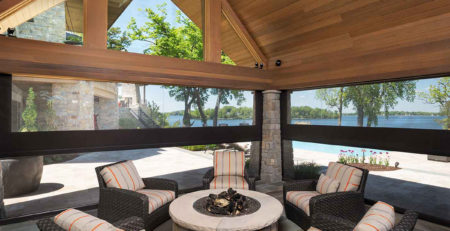
- Outdoor kitchens and poolside pavilions
- High-end pergolas and covered patios
The new generation of systems prioritizes aesthetics just as much as function. When retracted, screens are nearly invisible. When deployed, they create a sleek, polished enclosure.
Homeowners in 2026 want performance without compromising design.
- Larger Openings, Stronger Systems
Homes are being built with wider spans and expansive patio openings. Multi-panel sliding glass doors and large covered outdoor living areas demand screen systems that can handle significant width and height.
Manufacturers are responding with:
- Reinforced track systems
- Stronger wind resistance technology
- Heavier-duty motors
- Improved tensioning systems
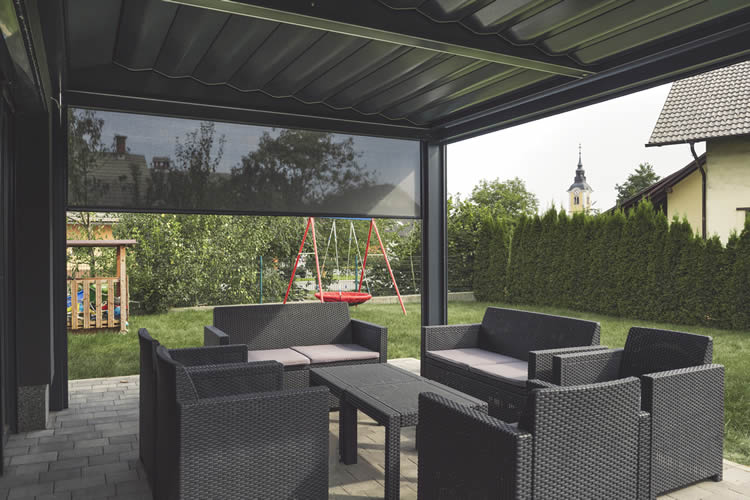
The result is smoother operation, greater durability, and better performance during windy conditions. The next generation of outdoor screens is engineered for scale.
- Year-Round Outdoor Living
In many regions, outdoor spaces are no longer seasonal. Homeowners want patios that function in spring, summer, and fall—and even mild winters.
Outdoor screens now work in combination with:
- Patio heaters
- Ceiling fans
- Outdoor fireplaces
- Retractable roofs
- Louvered pergolas
This layered approach transforms patios into true outdoor rooms. Screens provide shade and privacy in summer while helping block wind and retain warmth during cooler months.
The 2026 trend is about maximizing the return on outdoor living investments.
- Increased Demand for Privacy
As neighborhoods become more densely developed, privacy is becoming a major driver of outdoor screen installations. Privacy mesh fabrics allow homeowners to enjoy their space without feeling exposed to nearby houses.
Unlike solid walls or permanent enclosures, retractable screens maintain airflow and flexibility. When privacy isn’t needed, the screens disappear.
This balance between openness and seclusion is a defining feature of modern outdoor design.
- Enhanced Insect Protection Without Full Enclosures
Traditional screened-in porches limit flexibility. Today’s retractable systems allow homeowners to enclose a patio when insects are active and open it fully when they’re not.
The ability to instantly convert an open patio into a protected space is one of the most practical advancements in outdoor living. This flexibility is particularly valuable during peak mosquito seasons.
- Durable, Weather-Resistant Materials
Outdoor products must withstand sun, rain, wind, and humidity. In 2026, outdoor screen fabrics and hardware systems are more advanced than ever.
Modern outdoor shade systems feature:
- UV-stabilized fabrics
- Corrosion-resistant aluminum housings
- Powder-coated finishes
- Heavy-duty motors designed for repeated use
Homeowners expect long-term reliability. Manufacturers are responding with systems built to endure harsh weather conditions without fading, warping, or failing prematurely.
- Customization & Personalization
Outdoor screens are no longer one-size-fits-all. Homeowners can now choose from:
- Multiple fabric openness levels
- Various color options
- Privacy vs. visibility mesh types
- Integrated lighting compatibility
- Smart sensor add-ons
Customization ensures that the system fits both the architecture of the home and the lifestyle of the homeowner.
- Outdoor Screens as a Home Value Upgrade
Perhaps the most important 2026 trend is perception. Outdoor screens are no longer considered a luxury novelty. They’re increasingly viewed as a functional upgrade that enhances:
- Comfort
- Energy efficiency
- Curb appeal
- Property value
With outdoor living continuing to dominate home design trends, professionally installed motorized screens help properties stand out in competitive real estate markets.
What This Means for Homeowners in 2026
The next generation of outdoor screens is defined by intelligence, integration, and intentional design. They’re smarter, stronger, more discreet, and more adaptable than ever before.
If you’re investing in:
- A new covered patio
- A pergola or pavilion
- An outdoor kitchen
- A poolside entertainment area
- Or a backyard renovation
Outdoor screens should be part of the conversation early in the design process—not added later as an afterthought.
In 2026, outdoor living is about flexibility. Spaces must adapt to changing weather, sun angles, privacy needs, and entertainment demands. Modern retractable screen systems provide that adaptability instantly.
The homes that feel the most comfortable, functional, and polished are the ones embracing these evolving technologies.
And as outdoor living continues to expand in popularity, one thing is clear:
The future of outdoor spaces is not just open air—it’s intelligently controlled comfort.